
Which Local Dishes Should You Try in Zhangjiajie?
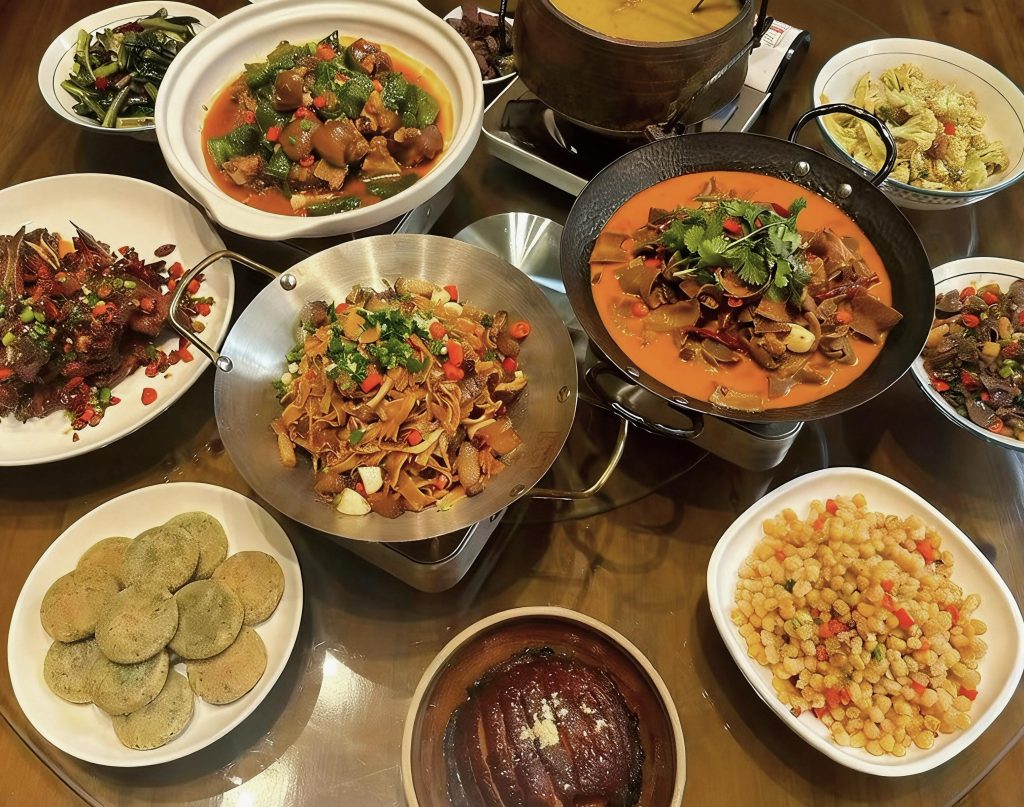
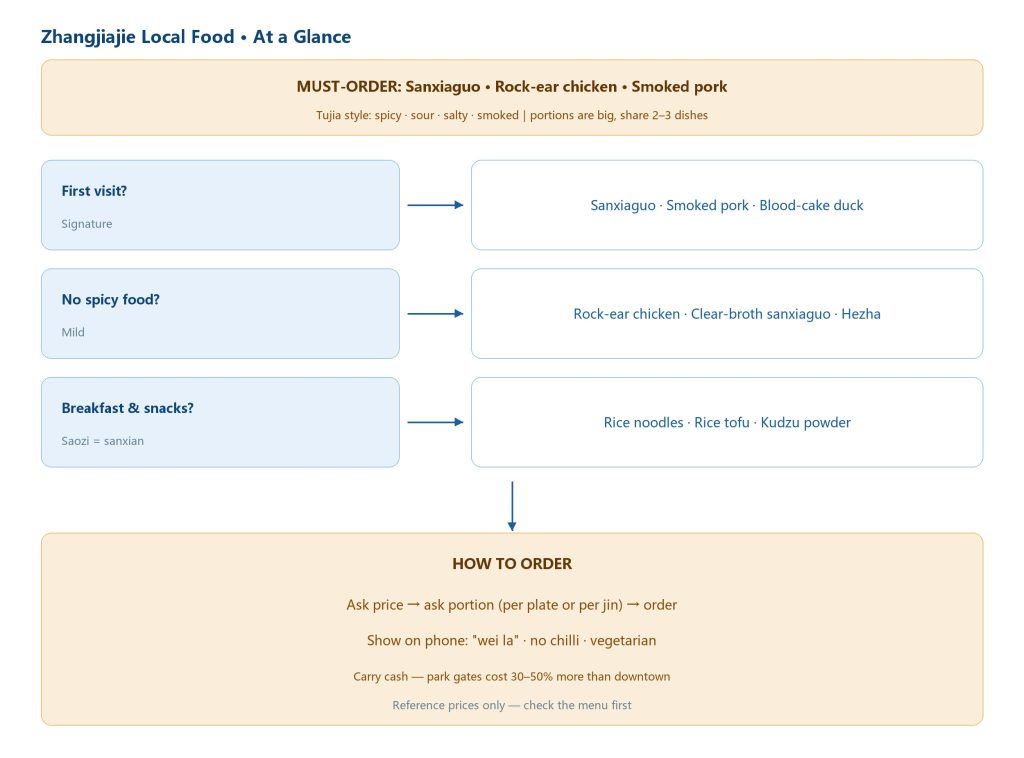
The dishes locals order most are sanxiaguo, rock-ear chicken soup and Tujia smoked pork. Sanxiaguo is smoked pork, pork intestine, tripe or tofu simmered in one pot; the chicken soup is clear and not spicy; the smoked pork is salty, smoky and made for rice. This is western Hunan Tujia food: spicy, sour, salty and heavily smoked, with generous portions, so two or three dishes will feed two or three people. The prices below are reference ranges from travel guides, not official prices, so check the menu before you order.
1、Which local dishes are must-orders?
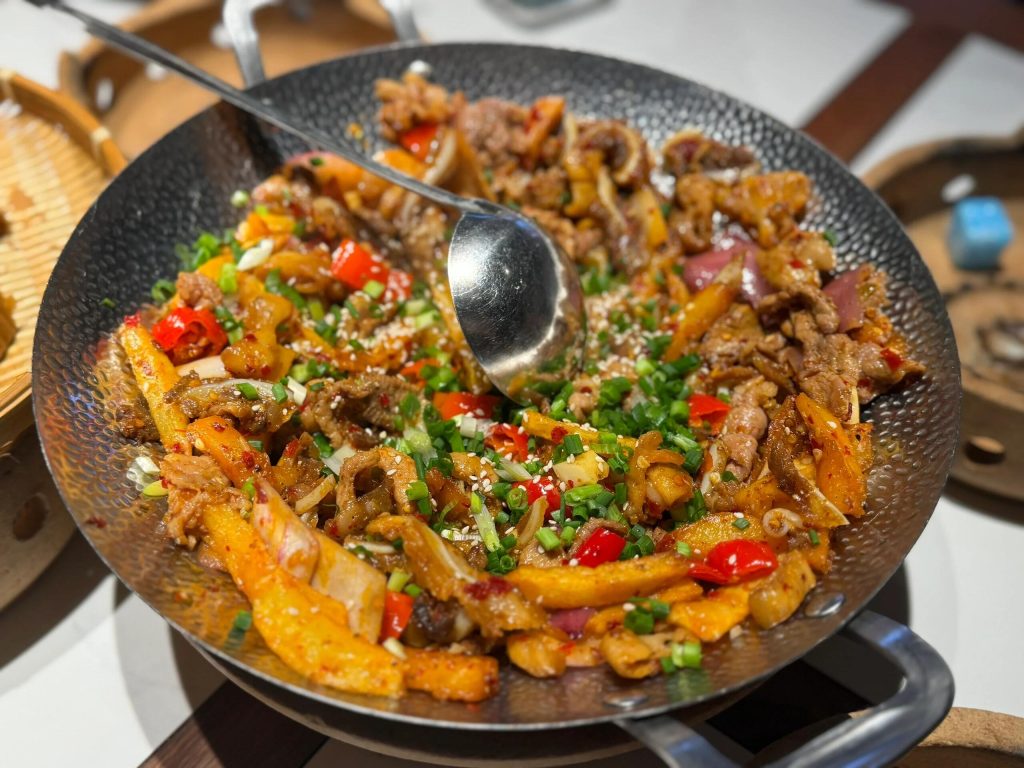
Sanxiaguo is the one almost everyone orders. The name means “three main ingredients in one pot.” The usual mix is pork intestine, tripe and smoked pork; tofu, potato and radish versions exist too. The red broth is spicy, the clear broth is mild. A small pot costs 60 to 130 yuan and feeds two or three people with a vegetable and rice. If you don’t want heat, say “wei la” for mildly spicy, or “qing tang” for clear broth.
If you can’t eat spicy food, order the rock-ear chicken soup. Rock ear is a lichen that grows on cliff faces and is slow-simmered here with free-range chicken. The broth is clear and not spicy at all. A pot costs 60 to 170 yuan and serves three or four. Real rock ear is scarce and expensive, so ask whether it is rock ear or ordinary mushroom.
Tujia smoked pork hangs above the kitchen stove until it cures, then it is sliced and stir-fried with garlic shoots, bracken or dried bamboo shoots, with the fat turning translucent. A plate costs 50 to 80 yuan. It is salty, which is why it goes with rice; ask for “shao fang yan” if you want less salt.
For something heavier, try blood-cake duck. Glutinous rice is mixed with duck blood and pressed into cakes, then braised with duck, ginger and green chilli. It is dark and rich, 68 to 98 yuan, enough for two.
2、What if you don’t eat spicy food or you are vegetarian?
There are more mild dishes than you would expect. Rock-ear chicken soup, clear-broth sanxiaguo, steamed egg and stir-fried greens are all mild. For sanxiaguo, ask for a clear broth and the chilli on the side, then add as much as you like.
Vegetarians can order hezha. Hezha is soybean ground and simmered with its fibre and green leaves, very mild in taste. Bracken, mushrooms and tofu are common too. Say “su” for vegetarian and ask whether lard or chicken stock is used. If you don’t eat pork, say so clearly; smoked pork turns up in a lot of dishes here.
If you don’t speak Chinese, type the sentence into your phone and show the waiter. Useful ones: “bu yao tai la” for not too spicy, “wei la” for mildly spicy, “bu fang la jiao” for no chilli, “you su cai ma” for vegetarian dishes, “bu chi zhu rou” for no pork, “ke yi shao you ma” for less oil. Ask one thing at a time and you will get an answer.
3、What should you try for breakfast and snacks?
Breakfast is a bowl of rice noodles, and locals call the topping “saozi.” Zhangjiajie noodles are round, semi-dry and thicker than elsewhere, served in a pork-bone broth. The topping is not called “jiaotou” here; it is “saozi,” which sounds like “shaozi.” The common ones are sanxian (shredded pork with wood-ear fungus, the classic and not spicy), braised beef, spicy beef, braised pork, pork intestine, pig trotter with kelp, lamb offal, chicken offal, shredded pork with wood ear and dried green beans. A bowl costs 8 to 15 yuan. For a first try, sanxian is the safest; if you avoid spicy food, skip the spicy beef and spicy chicken offal. The table usually has pickled soybeans, pickled chilli, pickled radish and shredded kelp to add yourself, and locals drop in a few drops of litsea oil. The breakfast stalls on Xibu Street in Wulingyuan run from about 6:30 to 9:00, which fits nicely before the park shuttle.
Snacks to keep you going. Rice tofu is a soft block made from rice, served with chilli and pickles, 8 to 15 yuan. Kudzu powder is mixed into a paste, usually sweetened, 10 to 20 yuan. Mugwort cake, haozi baba, is glutinous rice flour mixed with wild mugwort, locally white mugwort, filled with cured pork dice or sesame, wrapped in pomelo leaves and steamed into a green ball. You will find all of these on Xibu Street and in snack shops downtown.
4、How do you order without getting overcharged?
Ask the price, then the portion, then order. Portions here are big; two mains and one vegetable are usually enough for two or three people. For market-price dishes and anything sold by weight, ask for the unit price and net weight first, and only then decide.
Your phone may not pay, so carry some cash. Small stalls and farmhouse restaurants do not always take overseas cards. If you have Alipay or WeChat Pay International linked to an overseas card, paying through the app leaves a record; if you do not, pay cash and ask for a receipt showing the shop name, the dishes and the amount.
Park gates cost more than downtown. The same dish near the Wulingyuan landmark gate can be 30 to 50 percent dearer. For the local taste, head into Yongding District downtown or Xibu Street and pick a place where locals are sitting.
With elderly parents or children, order this way: one rock-ear chicken soup, one clear-broth or mildly spicy sanxiaguo, one steamed egg or stir-fried greens, plus rice. There is hot soup, nothing spicy, and everyone can eat.