
Is It Hard to Order Food in Zhangjiajie Without Chinese?
Not really. Most restaurants in Zhangjiajie show pictures on the menu, so you can point at a dish, say “I want this,” and get a decent meal without speaking a word of Chinese. The two things that do cause trouble are the heat of Hunan cooking and the QR-code menus that expect you to have WeChat or Alipay. This guide walks through a meal from the moment you sit down to the moment you pay, and tells you what to say at each step.
What should you do right after you sit down?
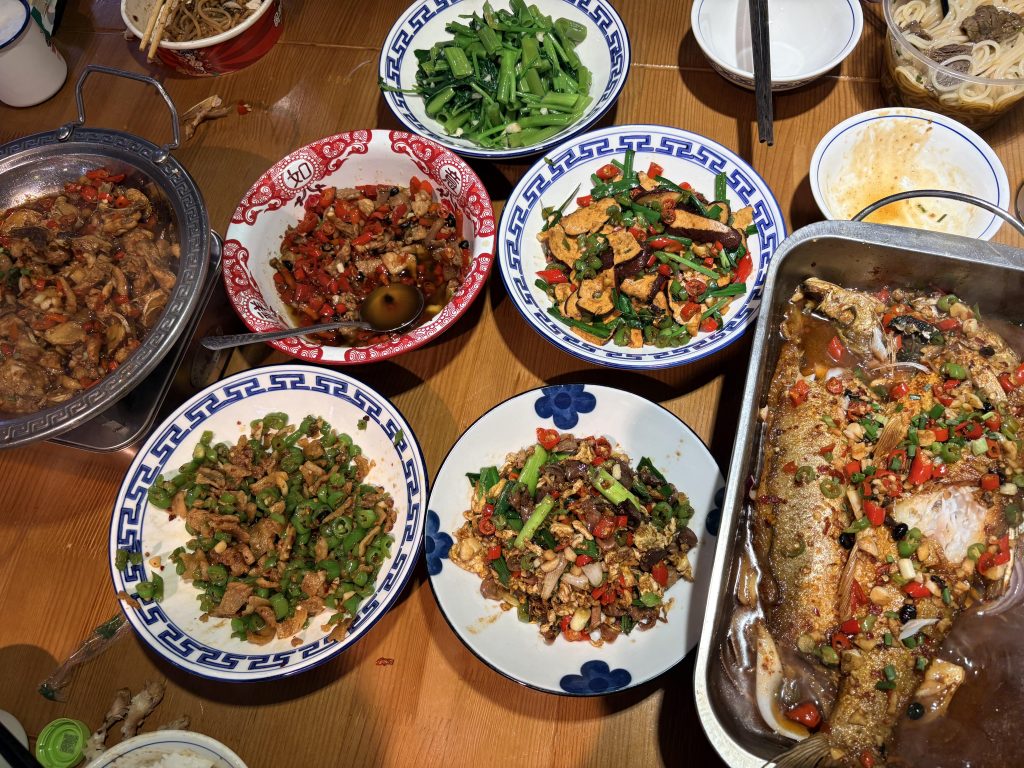
Look for pictures first, not for English. Ask for a menu with photos by showing “do you have a picture menu?” (有图片菜单吗?yǒu tú piàn cài dān ma?). Small restaurants in the city and in Wulingyuan increasingly print photos on their menus, and a few places in Wulingyuan even carry both Chinese and English versions. If the menu only has characters, look at what the table next to you is eating. When something looks good, point at it and ask “is this dish spicy?” (这个菜辣吗?zhè ge cài là ma?). Pointing works better than searching in a translation app, and the staff are used to foreign guests doing exactly that.
Your phone camera can scan a whole page of Chinese, but don’t trust the translated dish names. Chinese dish names are rarely a list of ingredients. “Fish-flavoured pork” contains no fish, and “ants climbing a tree” is minced pork with glass noodles, so a translation app will point you in the wrong direction. The photograph is the reliable part. Treat the machine translation as a hint, and ask the staff about the dish if you really want to know what is on the plate.
How do you order the right amount and the right heat?
Order one dish per person, plus one more, and add a bowl of rice. Dishes in Zhangjiajie arrive in the middle of the table and everyone shares them. If you order one plate per person the way you might at home, you will leave with a table full of leftovers. When you want to try more dishes, ask whether they can make a smaller portion. Many kitchens can do this even when it is not written on the menu. If a dish is marked “market price,” ask “how much is this?” (这个多少钱?zhè ge duō shǎo qián?) before you order it, because seafood and mountain ingredients are where surprise bills come from.
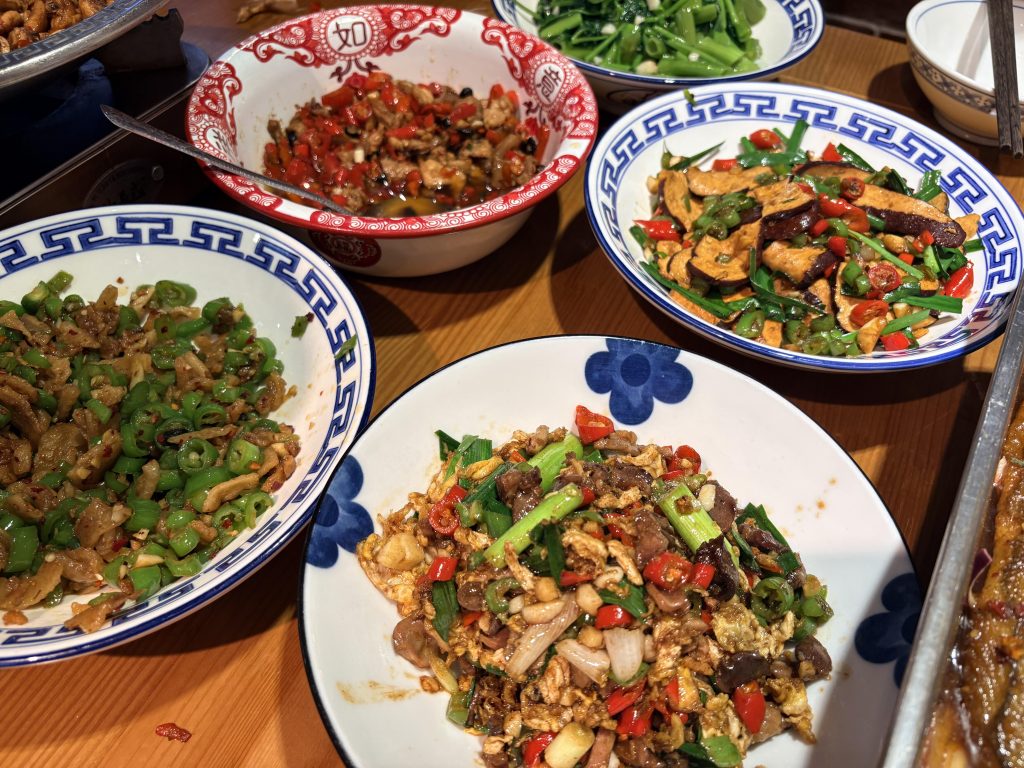
“Mildly spicy” is still very spicy in a Hunan restaurant, so say “no chilli at all” if that is what you mean. The word for mildly spicy, (微辣。wēi là.), follows the local standard, which is much hotter than most visitors expect. In a dish such as sanxiaguo, the chilli goes in before you arrive, so asking the kitchen to tone it down after the fact will not work. You have to say it when you order. If the QR-code menu asks you to pick a spice level, choose one and then show the staff “no chilli at all” (完全不要辣。wán quán bù yào là.) face to face so they take it seriously.
If you have an allergy or you don’t eat meat, write the Chinese sentence on your phone and hand it over instead of gesturing. For a peanut allergy, write “I have a severe peanut allergy. Please use no peanuts and no peanut oil.” For vegetarian food, write “I don’t eat meat. No meat and no meat stock.” Many dishes in Zhangjiajie are cooked with lard or flavoured with meat stock, so a plate of greens is not necessarily vegetarian. Keep both sentences in your photo album and show them when you order, and the kitchen will know that you mean it.
What happens when it’s time to pay?
The QR code on the table is convenient, but it only helps if you have WeChat or Alipay. Once you scan the code, the menu opens on your phone, you choose your dishes, and the kitchen receives the order straight away. The payment happens in the same flow. If you don’t use those apps, ask the staff for a paper menu, point at the pictures, and pay in cash at the counter when you finish. Small shops here can usually only scan Chinese payment codes, and foreign bank cards rarely work, so carry cash in small notes. A 100-yuan note is often hard for a restaurant to change. You can also ask the hotel front desk to book the table for you and check whether that restaurant accepts cash.
Go through the bill against the dishes you ordered, and don’t feel awkward about it. If something on the bill was never served, point at that line and say “I didn’t order this” (这个我没点。zhè ge wǒ méi diǎn.) while the staff are still there. Restaurants in China don’t expect tips, so you pay the amount on the bill and nothing more. If you want to take the leftovers with you, say “to go” (打包。dǎ bāo.) and they will pack it up for you.
Can’t read the menu at all? A handful of characters will cover most of it: 炒 means stir-fried, 蒸 means steamed, 鸡 is chicken, 牛 is beef, 猪 is pork, 鱼 is fish, 豆腐 is tofu, 饭 is rice, and 面 is noodles. With those words and the photos, you can put together a good meal. If you still can’t decide, point at the picture and say “I want this,” and the waiter will bring it to you.