Where to Photograph the Sea of Clouds in Zhangjiajie
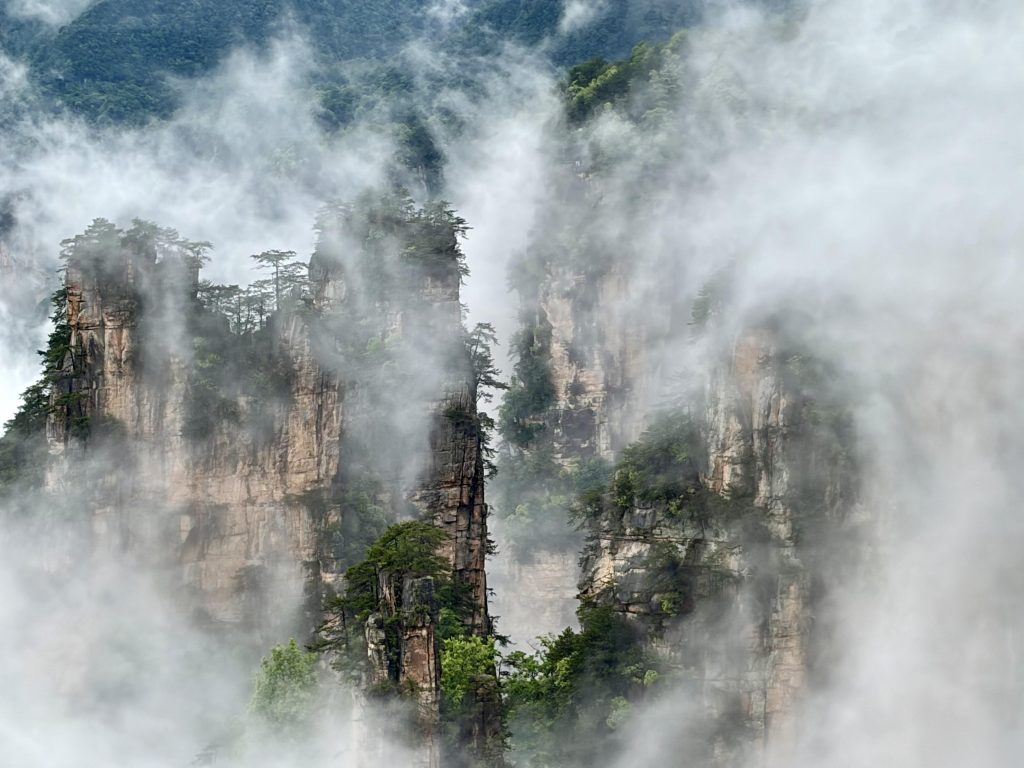
For a first attempt at photographing the sea of clouds in Zhangjiajie, start with Tianzi Mountain. It sits inside the Wulingyuan core scenic area, with high viewing platforms and open views. After rain, moisture stays in the valleys and the sandstone peaks appear layer by layer above the cloud. Jiangtai Pavilion, Daguan Platform and Shengtang Bay are all in the Tianzi Mountain area. People’s Daily lists Wulingyuan’s West Sea, Tianzi Mountain, Yangjiajie, Yuanjiajie and Huangshizhai among the regular photography spots for peak-forest clouds, and the Wulingyuan tourism website also names Tianzi Mountain as a place for sunrise and cloud views. This article mainly covers Zhangjiajie National Forest Park. Tianmen Mountain and the Grand Canyon require separate tickets and are not included in the forest park ticket.
Does Tianzi Mountain have good viewpoints for photographing the sea of clouds?
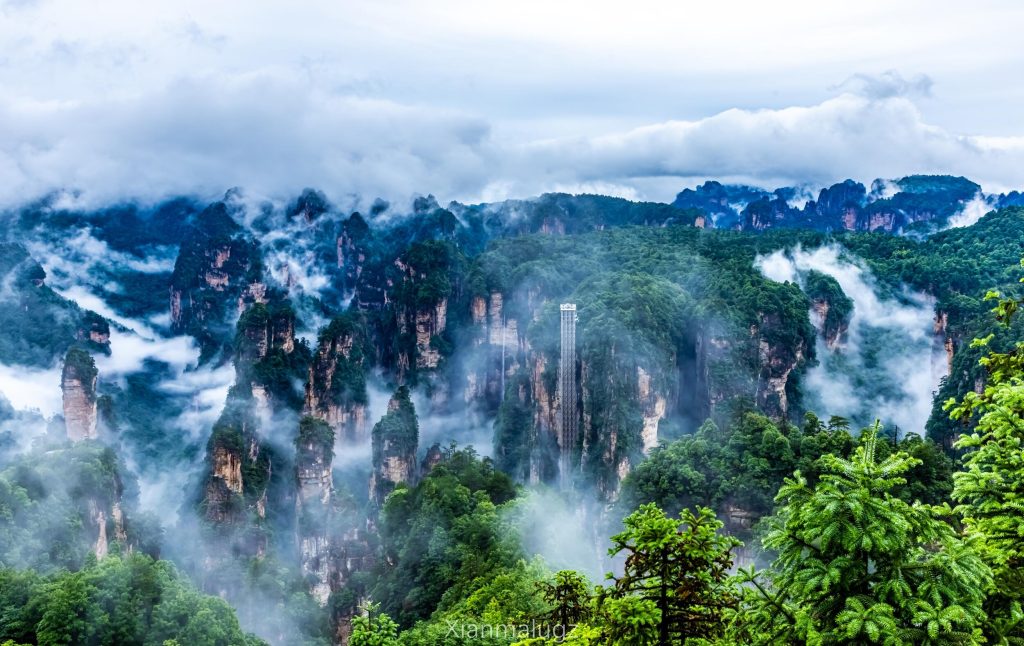
Yes. Jiangtai Pavilion, Daguan Platform and Shengtang Bay all offer views over the cloud sea. Jiangtai Pavilion is the wide-angle spot. When cloud rises out of the valley, the distant peaks look like a line of soldiers, so a wide lens shows the scale and a telephoto lens picks out individual pillars. Daguan Platform works well for sunrise, when light falls across the cloud in clear layers. Shengtang Bay is quieter, and mist rolling up through the bay gives the photo depth, but the steps can be slippery in the early morning. Helong Park and Yubi Peak are also recommended. On clear days they show the shape of the peaks; when cloud appears, the peaks look as if they are floating.
Older guides often suggest staying on the mountain and waiting for the clouds. Under current park notices, overnight stays, camping and commercial lodging are not allowed inside the core scenic area, so that option is no longer available. A more practical plan is to stay in the Wulingyuan urban area or near a park gate, then take the first park transport up the next morning. Tickets use timed, gate-specific real-name reservations. If an overseas phone number cannot receive a verification code, or you do not have a Chinese phone number, an official notice says you can use the manual service window; asking your hotel front desk to book ahead is another option. Foreign visitors should bring the passport used for booking, and the name must match.
Do Yuanjiajie, Yangjiajie and Huangshizhai have viewpoints for photographing the sea of clouds?
Yes. All three have places where cloud sea can be photographed. Yuanjiajie is the best for putting cloud and the Avatar-like peak forest in the same frame. Around Mihuntai and Tianxia Diyi Qiao, cloud pours into the gorge. When mist gathers around Qiankun Pillar, the pillar looks as if it is floating. Tianbo Mansion and One Step to Heaven in Yangjiajie are quieter, and the stone walls and deep valleys look stronger with cloud behind them. The stairs there are narrow and involve a steep climb, so they are not suitable for everyone. Liuqi Pavilion and Zhaixing Platform on Huangshizhai are long-standing viewpoints with wide views, though tour groups are more common; arriving early makes the morning more comfortable. The Sky Garden at Laowuchang can put terraced fields and peaks in one frame, but the path is narrow before dawn, so confirm transport in advance rather than walking alone in the dark.
Does Tianmen Mountain have viewpoints for photographing the sea of clouds?
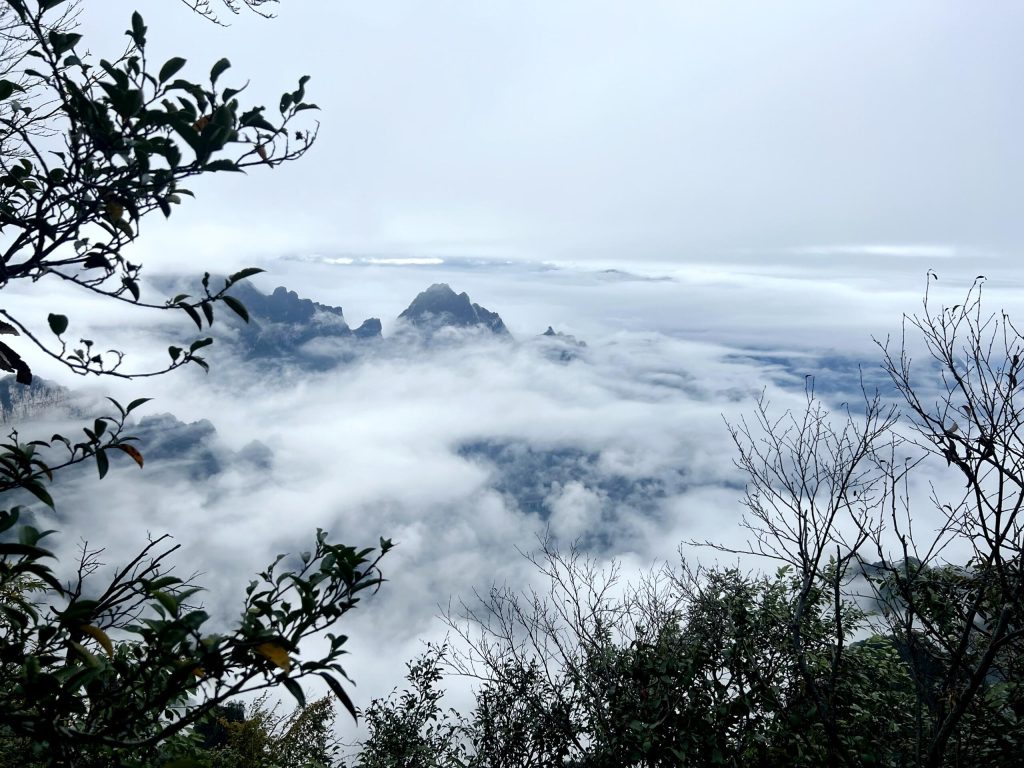
Yes. Tianmen Mountain also has places where the sea of clouds can be photographed, but it requires a separate ticket and sits south of Zhangjiajie city, outside the forest park. Tianmen Cave, Yunmeng Summit and the West Line plank walk may all see cloud after rain, and the image of cloud hanging across Tianmen Cave is especially well known. The glass walkway may close in strong wind, so follow the notice on the day. If you have limited time and only want cloud sea, give the morning to Tianzi Mountain. If you have already set aside half a day for Tianmen Mountain, treat the cloud as a bonus.
When is the sea of clouds most likely, and is a phone good enough?
The mornings after rain clears are the most likely time. In spring and summer this often falls between 6:00 and 8:30; in autumn and winter it is more often between 7:00 and 9:00. As the sun climbs, the cloud layer begins to break up. Local photographers say the cloud sea will not wait until late morning, so a clear morning after rain is the right time to go. If rain has been continuous and has not cleared, you will usually get low fog and poor visibility, not a cloud sea. Strong wind scatters the cloud, while very light wind may leave fog sitting over the view.
For a camera, f/8 to f/11 and ISO 100 are a useful starting point. A wide lens captures the full spread of cloud, while a 70 to 200mm lens compresses the layers of peaks. If you want the cloud to look as if it is moving, use a tripod and a longer exposure. On a phone, use the main camera with HDR, focus on a peak, and lower the exposure if the cloud surface turns white. Viewing platforms are slippery in the morning, so wear shoes with grip and bring a light jacket. Drone rules are not certain, so confirm with the park before flying and do not assume permission.